

Travel Guide - November 8, 2026
Tihar Festival in Nepal: History, Traditions, Culture and Celebrations
Table of Contents
No headings found in this article.
Nepal is a country where ancient traditions, cultural diversity and natural beauty come together. Beyond its famous Himalayan mountains and trekking destinations, Nepal is also known for its colourful festivals and vibrant community celebrations. Among these, Tihar Festival in Nepal, popularly known as the Festival of Lights, holds a special place in the hearts of Nepali people.
Celebrated over five days, usually in October or November, Tihar is one of Nepal’s most important annual festivals. During this period, families decorate their homes with flowers and lights, worship animals, prepare traditional food and gather to celebrate with relatives and neighbours. The festival also includes traditional singing, dancing and religious ceremonies.
One of the most beautiful aspects of Tihar is the way it brings people together. Many Nepalis who live and work far from their hometowns make special arrangements to return home. Whether they are working in Kathmandu, living in another part of Nepal or staying overseas, the festival gives them a reason to reunite with their families.
For international travellers, Tihar provides an opportunity to experience a different side of Nepal. Along with its famous trekking trails and mountain landscapes, visitors can discover the country’s cultural heritage, traditional hospitality and community life.
What Is the Tihar Festival in Nepal?
Tihar is a five-day Hindu festival celebrated across many parts of Nepal. It is also known as Deepawali and Yamapanchak. Each day has its own religious significance and traditional activities.
The celebrations are closely connected with respect for animals, worship of Goddess Laxmi, appreciation of nature and family relationships. Crows, dogs, cows and oxen are honoured on different days, while the final celebration focuses on the relationship between brothers and sisters.
In the Kathmandu Valley, the Newar community observes Swanti, a related celebration with distinctive traditions, including Mha Puja and the beginning of the Newar New Year according to Nepal Sambat.
Tihar is not simply about decorating houses and lighting lamps. It represents gratitude, good fortune, family connections and the importance of maintaining cultural traditions.
History and Origins of Tihar Festival in Nepal
Tihar has deep roots in Nepal’s religious beliefs and traditional culture. Its exact beginning is not documented in a confirmed historical year, but the festival has been passed down through generations through religious practices, mythology and family customs.
The celebration is associated with Yama, the Hindu god of death, and his sister Yamuna. Their traditional story is particularly important in explaining the significance of Bhai Tika.
The Story of Yama and Yamuna
According to Hindu mythology, Yamuna wanted to meet her brother Yama after a long period of separation. She repeatedly invited him to visit her home, but he remained away because of his responsibilities.
Eventually, Yama accepted his sister’s invitation and travelled to meet her. Yamuna welcomed him with great affection and arranged a special ceremony. She applied colourful tika to his forehead, decorated him with flower garlands and prepared a meal for him.
During the ceremony, she prayed for his happiness, protection and long life. Yama was touched by her devotion and blessed her in return.
This traditional story is closely associated with Bhai Tika, when sisters pray for the well-being of their brothers and brothers express their affection and appreciation. The custom remains an important part of Nepali family life.
Why Is Tihar Also Called Yamapanchak?
The name Yamapanchak is associated with Yama and the five-day period of celebration. The word Panchak refers to five.
The traditional rituals during these days include honouring animals, worshipping Goddess Laxmi and celebrating family relationships. Together, these practices reflect beliefs about protection, prosperity, gratitude and respect for living beings.
How Tihar Traditions Have Changed Over Time
Although the festival has maintained its cultural importance, the way people celebrate has gradually adapted to modern lifestyles.
In earlier generations, families mainly used traditional oil lamps, locally available flowers and handmade decorations to prepare their homes. Village celebrations were closely connected to agricultural life, family gatherings and community traditions.
Today, colourful electric lights, modern decorations and contemporary music have become common, especially in urban areas. However, traditional rituals, homemade festive dishes and Deusi Bhailo performances continue to be important parts of the celebration.
Nepali communities living abroad also observe Tihar, helping younger generations maintain their connection with their cultural heritage.
Despite these changes, the values behind the festival remain the same: family togetherness, respect for nature, happiness and hopes for a prosperous future.
The Five Days of Tihar Festival in Nepal
Each day of Tihar has a different meaning and is observed through particular rituals. Together, these five days create one of Nepal’s most memorable cultural celebrations.
1. Kaag Tihar – Honouring Crows
The festival begins with Kaag Tihar, when people offer food to crows.
According to traditional Hindu beliefs, crows are considered messengers of Yama, the god of death. People believe that feeding them helps prevent bad news and brings good fortune to their households.
Families usually place food on rooftops, terraces or open spaces where the birds can find it. This simple tradition reflects the importance of showing kindness towards animals and other living creatures.
2. Kukur Tihar – Celebrating the Loyalty of Dogs
The second day is dedicated to dogs, which are appreciated for their loyalty, companionship and protective nature.
During Kukur Tihar, people decorate dogs with marigold garlands, apply tika to their foreheads and offer them special meals. Both household pets and community dogs are included in the celebration.
This tradition has become internationally recognised because of its heartwarming message of kindness towards animals.
For many visitors, seeing dogs celebrated with flowers and traditional tika is one of the most memorable experiences of Tihar.
3. Gai Tihar and Laxmi Puja – Welcoming Wealth and Prosperity
The third day is dedicated to cows and Goddess Laxmi, who represents wealth, prosperity, happiness and good fortune in Hindu tradition.
During the morning, people worship cows and offer them food, flowers and tika. Cows have an important place in Hindu culture and have traditionally supported rural households through agriculture and dairy production.
The evening is especially significant because families prepare their homes for Laxmi Puja.
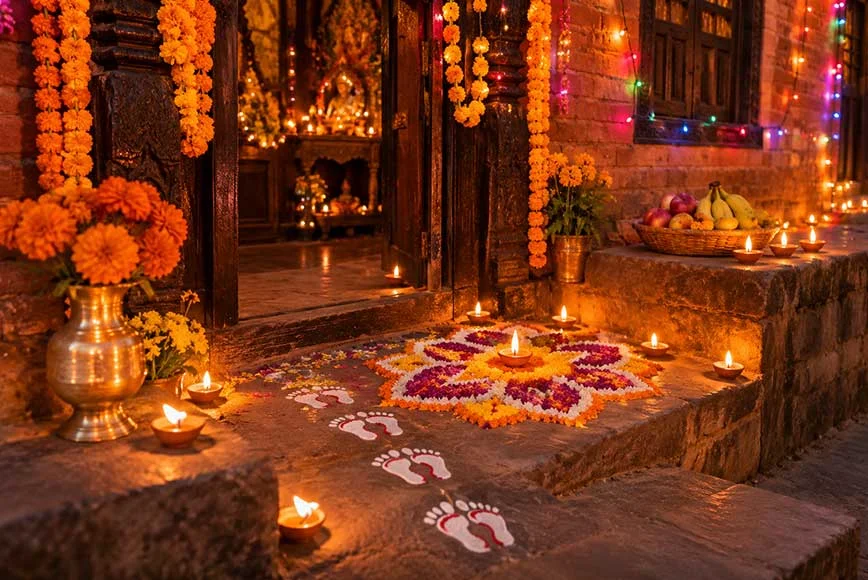
People clean their houses, decorate entrances with flowers and create colourful rangoli patterns. Traditional oil lamps, known as diyos, are placed around doorways, windows, balconies and prayer rooms.
One distinctive custom is Laxmi ko Paila, meaning the footprints of Goddess Laxmi. Families create small footprints using rice flour or coloured materials, starting from the entrance and leading towards the prayer room. These footprints symbolise an invitation for Goddess Laxmi to enter the home and bless the family with prosperity.
Families also arrange religious offerings and perform prayers in the evening.
As night falls, houses, temples, shops and streets become illuminated with traditional lamps and colourful electric decorations. The beautiful combination of flowers, lights and rangoli makes Laxmi Puja one of the most visually impressive evenings in Nepal.
4. Goru Tihar and Mha Puja – Respecting Nature and Life
The fourth day includes Goru Tihar, when oxen are honoured for their contribution to traditional farming.
In rural Nepal, oxen have played an important role in ploughing fields and supporting agricultural activities. The celebration recognises their contribution to the livelihoods of farming communities.
The Newar community also observes Mha Puja, a special ceremony dedicated to honouring oneself. It represents self-respect, purification and appreciation of human life.
Mha Puja also marks the beginning of the Newar New Year according to the Nepal Sambat calendar.
In different communities, Govardhan Puja and other regional customs are also observed during this day.
5. Bhai Tika – Celebrating the Relationship Between Brothers and Sisters
Bhai Tika is the final day of Tihar and one of its most meaningful family celebrations.
Sisters prepare colourful tika and apply it to their brothers’ foreheads. They also place flower garlands around their necks and offer prayers for their brothers’ happiness, health and long lives.
Brothers give gifts and blessings to their sisters in return.
For many families, this ceremony is particularly emotional because it provides an opportunity for siblings to meet after spending time apart. Those living in different cities or countries often arrange their schedules to celebrate together.
Bhai Tika represents the affection, trust and lifelong connection shared between brothers and sisters.
Tihar: A Festival That Brings Families Back Home
One of the most meaningful parts of Tihar is the opportunity it creates for family reunions.
In Nepal, many people move away from their villages to find employment, continue their education or establish businesses in larger cities. Others work in different regions or travel overseas for better opportunities.
Although modern life keeps people busy throughout the year, Tihar gives them a special reason to return home.
As the festival approaches, people arrange their journeys to reach their hometowns before the celebrations begin. Roads, bus stations and domestic transport services become busy with passengers travelling to different parts of the country.
Parents look forward to welcoming their children, brothers and sisters meet again, and relatives gather under one roof to share meals and exchange gifts.
For Nepalis living abroad, returning home during Tihar can be particularly special. Even when travelling is not possible, families stay connected through phone calls and video conversations.
The festival reminds people that no matter how far they travel or where their work takes them, family and home remain important parts of their lives.
This spirit of reunion is one of the reasons Tihar is so deeply valued in Nepali society.
Deusi Bhailo: Singing, Dancing and Sharing Happiness
When evening arrives during Tihar, many neighbourhoods become lively with traditional music and dancing.
Deusi Bhailo is one of the most popular activities of the festival. Groups of children, young people and adults visit nearby houses to sing traditional songs, perform dances and celebrate with local families.
Traditionally, Bhailo has often been associated with groups of women and girls, while Deusi has been associated with groups of men and boys. Today, participation is more flexible, and people of different ages and genders enjoy both activities.
Musical instruments such as the madal provide rhythm for the songs, while performers clap, dance and sing together.
Homeowners welcome the visiting groups by offering money, sel roti, sweets, fruits and other refreshments. In return, the performers sing traditional verses and offer blessings for happiness and prosperity.
In many neighbourhoods, families sit outside their homes or gather in courtyards to watch the performances. Some people dance, while others enjoy the music and prepare food for their visitors.
This tradition creates a wonderful connection between neighbours and communities. It is also one of the best ways for travellers to experience the joyful atmosphere of Tihar.
Traditional Foods Enjoyed During Tihar
Food is an important part of Nepali festivals, and Tihar is no exception. Families prepare special dishes at home and share them with relatives, neighbours and visitors.
Some traditional foods commonly enjoyed during the festival include:
- Sel Roti: A traditional ring-shaped bread made from rice flour and fried until golden brown. It is one of the most popular festive foods in Nepal.
- Fini Roti: A delicate, crispy Nepali sweet often served during special celebrations.
- Anarsa: A traditional sweet prepared using rice flour and sugar.
- Kheer: A rice pudding cooked with milk and sugar.
- Fruits and homemade sweets: Prepared for family gatherings, religious offerings and visiting guests.
Preparing these dishes is often a family activity. Parents, children and relatives work together in the kitchen, sharing recipes and enjoying time together.
Food therefore becomes more than part of the celebration; it is another way of bringing people closer.
How Tihar Is Celebrated in Cities, Villages and Himalayan Regions
Tihar is observed in many parts of Nepal, but celebrations can look quite different depending on local traditions, geography and community lifestyles.
From busy urban neighbourhoods to quiet mountain settlements, each location offers its own atmosphere.
Tihar Celebrations in Cities
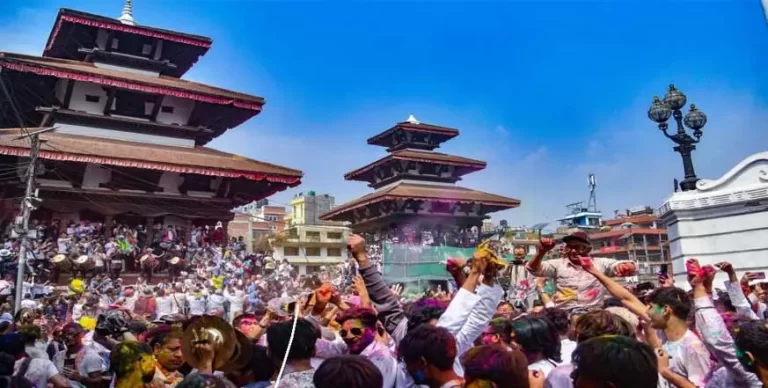
Cities such as Kathmandu, Lalitpur, Bhaktapur and Pokhara become colourful during the festival.
Houses, shops, temples and streets are decorated with electric lights, marigold flowers, traditional lamps and rangoli designs. Local markets become busy as families purchase flowers, sweets, fruits and other festival supplies.
In Kathmandu Valley, traditional Newari neighbourhoods offer a particularly interesting setting. Historic brick houses, carved wooden windows, temples and courtyards provide a beautiful backdrop to the celebrations.
During the evenings, groups of young people visit residential areas for Deusi Bhailo performances, while families gather at home for Laxmi Puja.
Visitors can enjoy the lively atmosphere while discovering the region’s cultural and architectural heritage.
Traditional Tihar Activities and Cultural Programmes
Tihar Festival in Nepal in rural communities, celebrations often take place around family homes and shared village spaces.
People decorate traditional houses with flowers and oil lamps, prepare homemade dishes and visit their neighbours. Children and young adults organise Deusi Bhailo groups, bringing music, dancing and entertainment to different parts of the village.
Local clubs and community groups also play an important role in Tihar celebrations. They often organise friendly sports competitions, including volleyball and football matches, as well as traditional cultural programmes, dance performances and musical events. These activities bring villagers together, encourage community participation and create a lively festive atmosphere.
Tihar is also an important time for relatives who have moved to cities or foreign countries to return to their ancestral homes.
Family reunions, shared meals, sports activities and visits between neighbours strengthen the relationships that are an important part of village life.
For international travellers, these celebrations provide a wonderful opportunity to experience Nepal’s rural culture, community spirit and traditional hospitality.
Tihar Celebrations in Himalayan Mountain Regions
Tihar is also observed in different Himalayan settlements, although local celebrations depend on the religious beliefs and cultural traditions of each community.
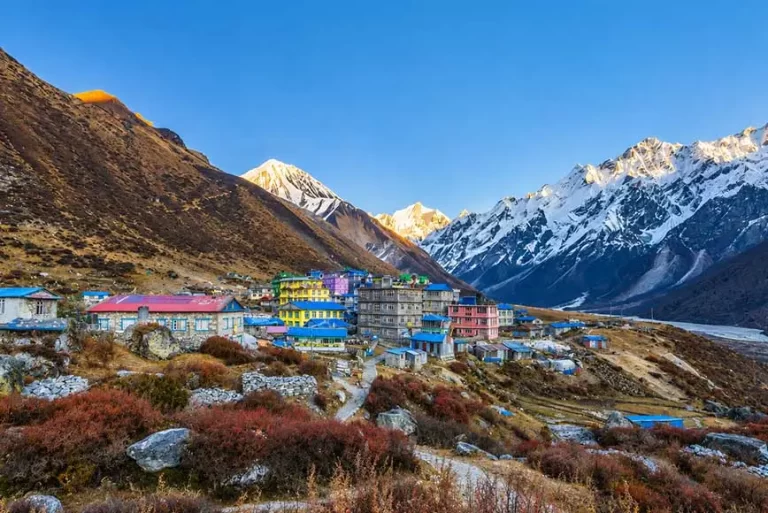
In parts of the Everest, Annapurna and Langtang regions, travellers may encounter communities where families maintain their own festive customs alongside wider Nepali celebrations.
Traditional stone houses, mountain surroundings and close-knit villages create a different setting from the busy streets of Kathmandu and Pokhara.
Families may gather for festive meals, decorate their homes and spend time with neighbours where Tihar is observed.
It is important to recognise that Himalayan communities are culturally diverse. Sherpa and other Buddhist communities have their own religious calendars and festivals, so not every village follows the same five-day Tihar rituals.
For trekkers visiting Nepal during the festival season, learning about these local differences can make the journey more meaningful.
Best Places to Experience Tihar Festival in Nepal
Travellers who want to experience Nepali festivals can explore different destinations during Tihar.
- Kathmandu: Explore local neighbourhoods, traditional markets and temples decorated with colourful lights. The capital offers a lively atmosphere during the festival.
- Patan: Discover Newari architecture, historic courtyards and traditional cultural celebrations around Patan Durbar Square.
- Bhaktapur: Walk through ancient streets, explore traditional houses and learn about the rich Newari heritage of this historic city.
- Pokhara: Enjoy the festive atmosphere around the lakeside area while experiencing the city’s beautiful surroundings and mountain views.
- Himalayan Villages: Depending on local customs and the timing of your trek, you may have opportunities to learn about mountain lifestyles and community traditions during the festival period.
Visitors should always respect local customs, especially during religious ceremonies. Asking permission before photographing people or entering private homes is a thoughtful way to appreciate the celebrations.
Experience Nepal’s Culture Beyond Trekking
Nepal is much more than a destination for mountain climbing and trekking. Its festivals, traditional settlements, local food and welcoming communities are equally important parts of the country’s identity.
At Ruby Alpine Trails Pvt. Ltd., we believe that discovering Nepal means understanding both its natural landscapes and its cultural heritage.
We organise guided trekking adventures across the Everest, Annapurna, Manaslu, Langtang, Ganesh Himal and Ruby Valley regions. Through our local experience, we encourage travellers to explore traditional communities, learn about local lifestyles and appreciate the cultural diversity of the Himalayas.
If you are planning a visit to Nepal, consider travelling during a cultural festival such as Tihar. It is an excellent opportunity to experience local traditions, meet welcoming people and understand the values that shape Nepali society.
Whether you are exploring the historic streets of Kathmandu Valley, visiting traditional villages or walking through Himalayan landscapes, Nepal has something special to offer throughout the year.
Explore Nepal with Ruby Alpine Trails and discover its mountains, traditions, people and unforgettable cultural experiences.
Happy Tihar and शुभ दीपावली!