

Annapurna Region, Manaslu Region, Travel Guide - November 19, 2026
Thorong La Pass vs Larke La Pass
Table of Contents
No headings found in this article.
Nepal is home to some of the most rewarding high-altitude trekking routes in the world. Among them, Thorong La Pass in the Annapurna region and Larke La Pass in the Manaslu region offer two beautiful Himalayan crossing experiences. Both routes take trekkers above 5,000 metres, through dramatic mountain landscapes and traditional Himalayan settlements.
As a local trekking partner in Nepal, we know that choosing between these two passes involves more than comparing their elevations. Trekkers should also consider the length of the crossing day, the condition of the trail, the availability of accommodation, the surrounding villages, and the level of remoteness.
The Thorong La Pass vs Larke La Pass comparison helps you understand what makes each crossing different and which adventure may suit your interests, fitness, and trekking experience.
Where Are Thorong La Pass and Larke La Pass Located?
Understanding the geography helps explain why these two crossings feel so different.
Thorong La Pass in the Annapurna Region
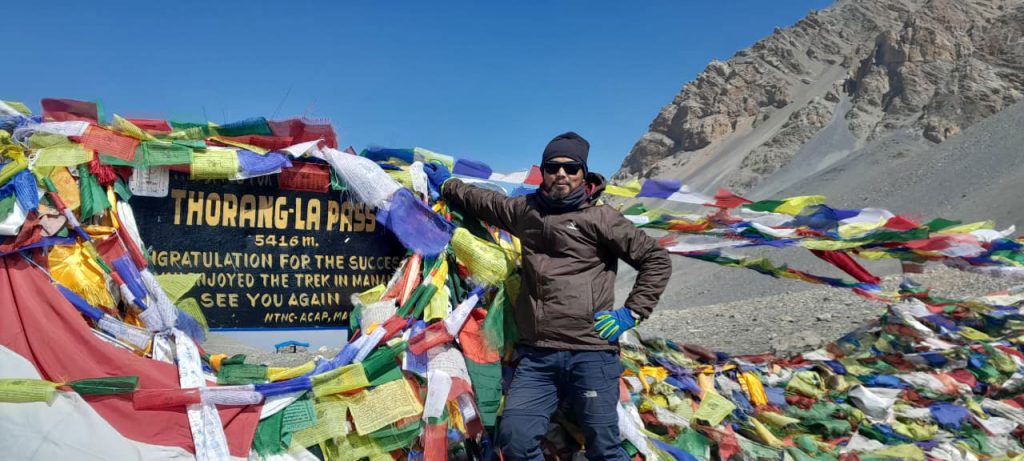
Thorong La Pass lies between the Manang and Mustang districts in north-central Nepal. It forms the highest point of the Annapurna Circuit Trek and connects the Manang Valley with the Muktinath area of lower Mustang.
Most trekkers approach the pass from the east after walking through Dharapani, Chame, Pisang, Manang, Yak Kharka, and Thorong Phedi.
After crossing the pass, trekkers descend towards Muktinath, an important pilgrimage destination for both Hindu and Buddhist communities. Many continue towards Kagbeni, Jomsom, and the lower Mustang region.
The Annapurna Circuit offers a gradual journey through different landscapes, from green river valleys and forests to dry mountain terrain.
Larke La Pass in the Manaslu Region
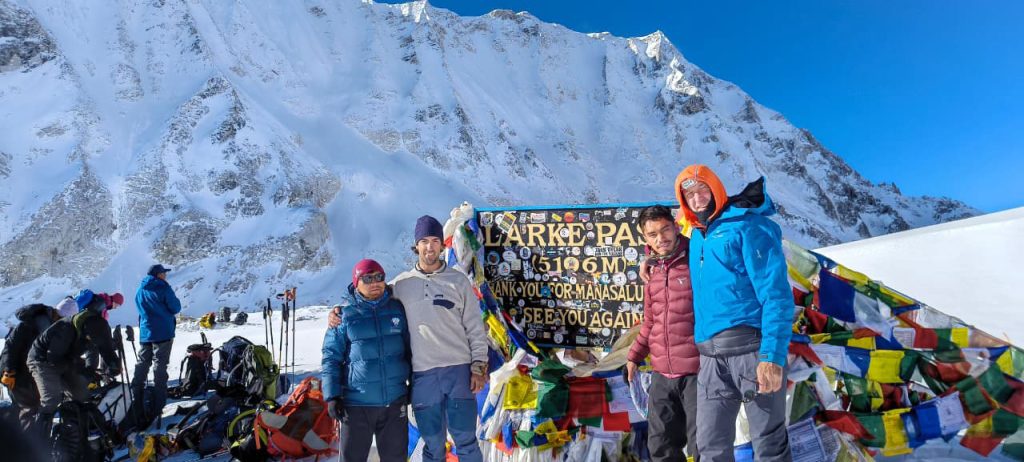
Larke La Pass, also known as Larkya La, lies in the Manaslu region of western Nepal. It forms the highest point of the Manaslu Circuit Trek and connects the upper Budhi Gandaki Valley with the Dudh Khola Valley towards Bimthang.
Trekkers generally approach the pass through Machha Khola, Jagat, Deng, Namrung, Lho, Samagaun, and Samdo before reaching Dharamsala.
After crossing Larke La, the trail descends towards Bimthang, surrounded by impressive Himalayan peaks and alpine landscapes. Trekkers then continue towards Tilije and Dharapani.
Unlike the Annapurna Circuit, the Manaslu Circuit takes you through a more remote mountain environment, where traditional villages and local lifestyles remain an important part of the experience.
Altitude and Acclimatisation: Which Pass Is Higher?
Altitude is one of the first things trekkers consider when comparing these two passes.
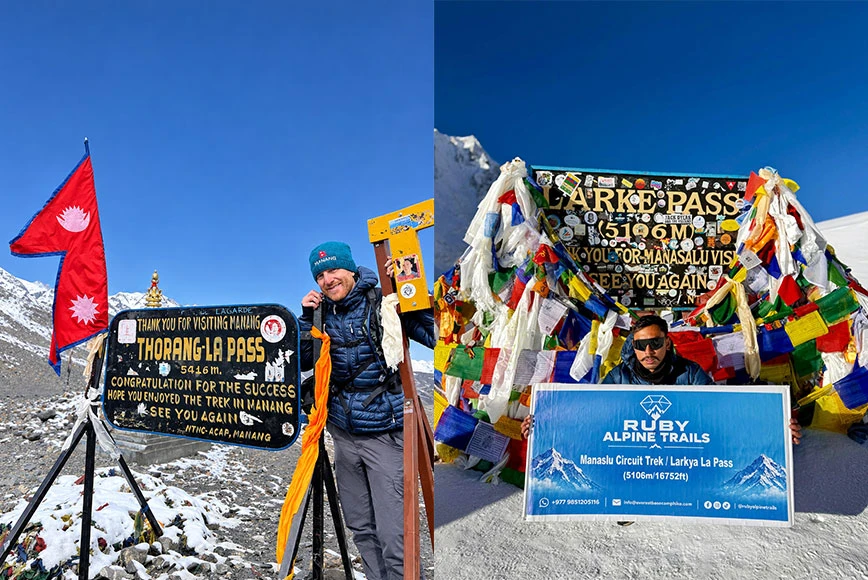
Thorong La Pass reaches 5,416 metres (17,769 feet), while Larke La Pass reaches approximately 5,106 metres (16,752 feet). Thorong La therefore stands around 310 metres higher.
However, the difference in elevation does not tell the whole story. Your acclimatisation schedule, walking pace, weather, and physical condition influence how difficult the crossing feels.
Acclimatisation on the Annapurna Circuit
Manang provides an important acclimatisation stop before the Thorong La crossing. It is better to add additional day in Manang to help the body adjust to the increasing elevation.
During this rest day, trekkers can explore nearby viewpoints, visit Gangapurna Lake, or hike towards higher elevations before returning to Manang to sleep.
From Manang, the route gradually climbs through Yak Kharka and Ledar before reaching Thorong Phedi or High Camp.
This gradual approach helps trekkers prepare for the high-altitude crossing.
Acclimatisation on the Manaslu Circuit
The Manaslu Circuit also provides opportunities for acclimatisation, particularly around Samagaun and Samdo.
Many itineraries include an extra day in Samagaun, where trekkers can explore Birendra Lake or hike towards Manaslu Base Camp, depending on fitness and itinerary.
From Samagaun, the route continues towards Samdo and Dharamsala. Trekkers spend the night at Dharamsala before attempting Larke La the following morning.
In my experience, trekkers should never rush either itinerary simply to save one day. Proper acclimatisation makes a significant difference to comfort and safety at high altitude.
What Is the Crossing Day Like?
This is one of the most important differences in the Thorong La Pass vs Larke La Pass comparison. Both crossings require an early start and a full day of walking, but the trail conditions and surroundings differ.
Crossing Thorong La Pass: Thorong Phedi to Muktinath
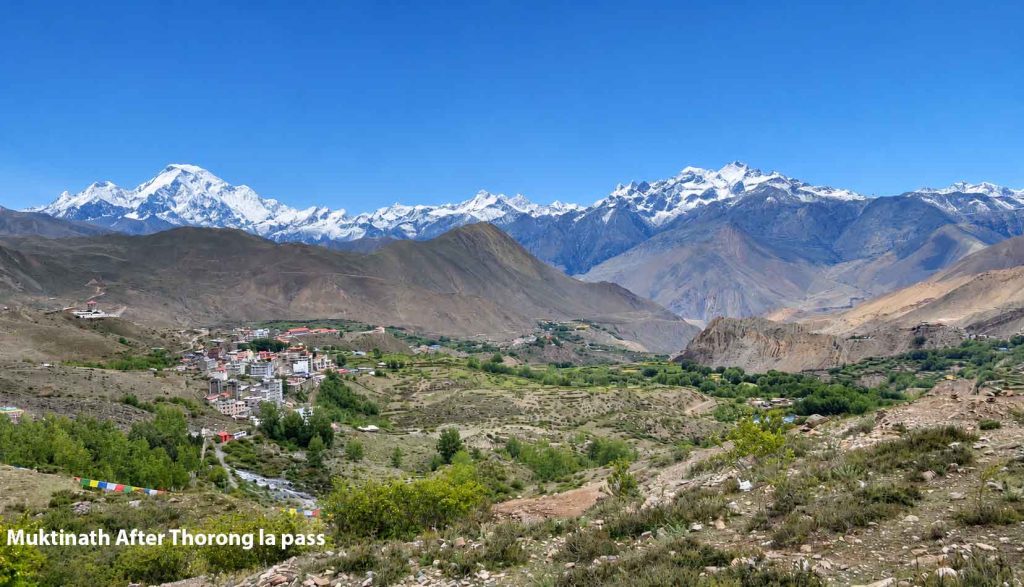
Most trekkers start hiking between approximately 3:00 and 5:00 AM, depending on their accommodation, weather, and the advice of their guide.
The trail climbs gradually from Thorong Phedi towards the high mountain pass. If you stay at High Camp, you begin from a higher elevation and have a shorter ascent to the summit. As you climb, the air becomes thinner and the temperature can drop considerably. Trekkers should walk slowly, maintain a steady pace, and take short breaks when necessary.
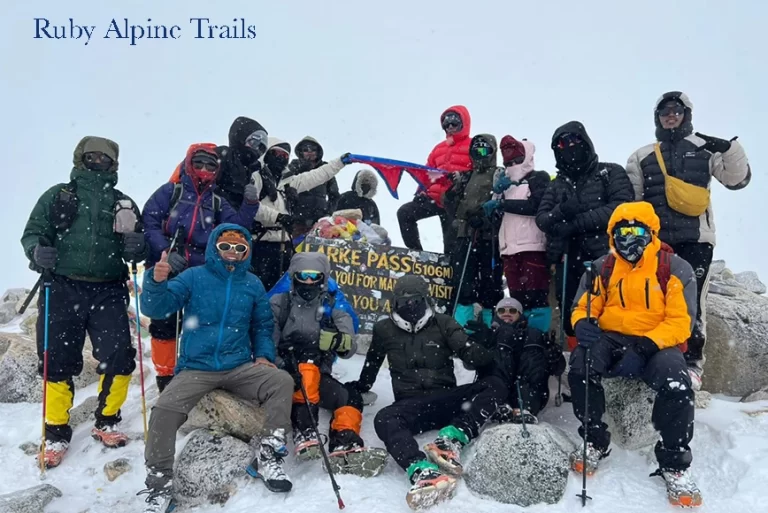
After reaching the Thorong La Pass signboard at 5,416 metres, most trekkers spend a little time enjoying the views and taking photographs before beginning the long descent.
The descent towards Muktinath is demanding, particularly after several hours of walking at high altitude. The trail loses a substantial amount of elevation, so trekkers need to watch their footing and manage their energy carefully.
A typical crossing takes around 8–10 hours, although weather, snow, fitness, and walking pace can change the total time.
Crossing Larke La Pass: Dharamsala to Bimthang
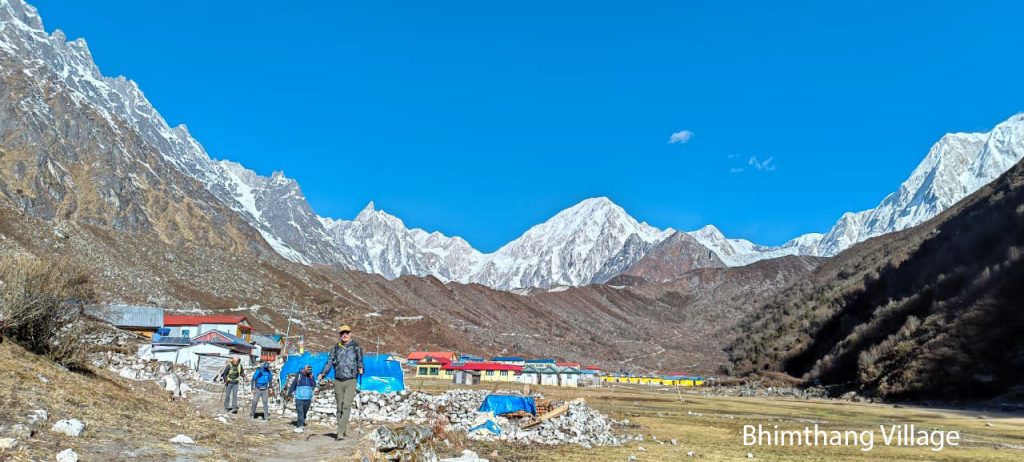
The Larke La crossing also starts early, usually before sunrise. Trekkers leave Dharamsala, also known as Larkya Phedi, and follow the trail towards the high mountain pass.
The route climbs through a remote alpine landscape, with mountain slopes, glaciers, and snow-covered peaks surrounding the trail.
The ascent can feel demanding because trekkers have already spent several days walking at high altitude. The cold morning conditions and long distance also require good preparation.
After reaching Larke La at approximately 5,106 metres, trekkers begin the descent towards Bimthang.
The descent is long and can become slippery when snow or ice covers sections of the trail. Trekkers should take their time, especially when fatigue begins to affect their balance.
The crossing commonly takes around 8–10 hours, but difficult weather or trail conditions can extend the day.
A guide’s observation: Do not judge either crossing only by the time it takes to reach the summit. The descent is also a major part of the challenge. Save enough energy for the journey after reaching the pass.
Which Pass Is More Difficult?
Many trekkers ask whether Thorong La or Larke La is harder. There is no single answer because the difficulty depends on individual fitness, acclimatisation, weather, snow conditions, and trail conditions.
Why Thorong La Can Be Challenging
Thorong La reaches a higher elevation than Larke La. At 5,416 metres, the thin air can make even a gradual climb feel exhausting.
The early morning cold, strong winds, and long descent towards Muktinath can also make the crossing difficult.
Trekkers who do not acclimatise properly in Manang may struggle with altitude-related symptoms. For this reason, I recommend following a gradual itinerary rather than rushing towards Thorong Phedi.
Why Larke La Can Be Challenging
Larke La sits at a lower elevation, but that does not make it an easy crossing.
The route involves a long walking day from Dharamsala to Bimthang. The remote location also means fewer facilities and less flexibility if weather conditions change.
Snow and ice can make the descent more difficult, particularly during periods of unstable weather.
In the Thorong La Pass vs Larke La Pass comparison, Thorong La presents the higher altitude challenge, while Larke La can feel equally demanding because of its remote setting and long crossing day.
Both passes require a good level of fitness, proper acclimatisation, suitable equipment, and experienced local guidance.
Mountain Views and Landscapes: What Makes Each Route Special?
Both routes offer beautiful Himalayan scenery, but they provide different landscape experiences.
Mountain Scenery Around Thorong La Pass
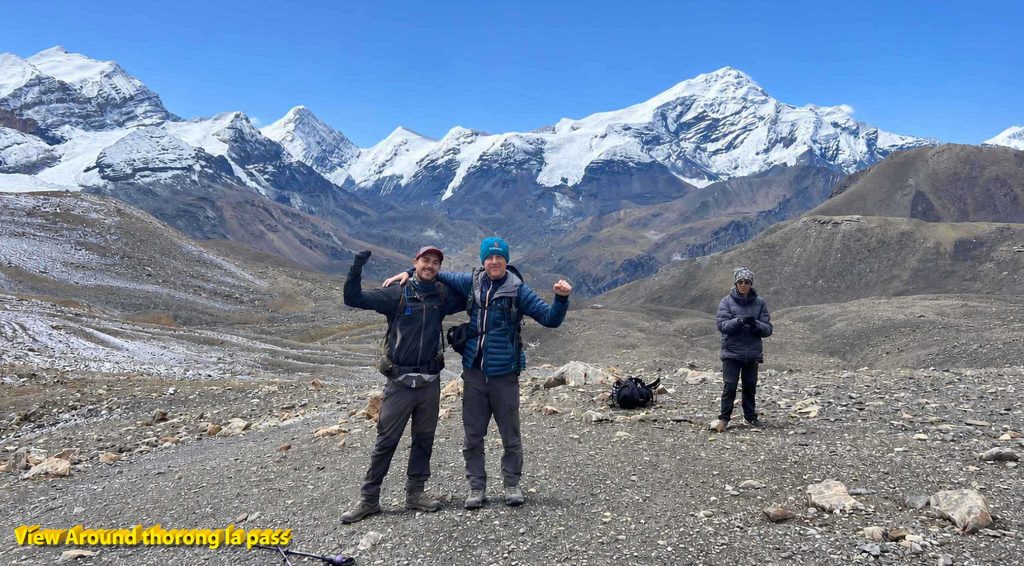
The Annapurna Circuit takes you through a changing landscape as you move from the greener lower valleys towards the dry and rugged terrain of Manang and Mustang.
During the trek, you can enjoy views of:
- Annapurna II, III and IV
- Gangapurna
- Tilicho Peak
- Chulu peaks
- Dhaulagiri from parts of the Mustang region
The landscape around Thorong La feels open and dramatic. After crossing the pass, the descent towards Muktinath reveals the distinctive dry terrain of Mustang.
Mountain Scenery Around Larke La Pass
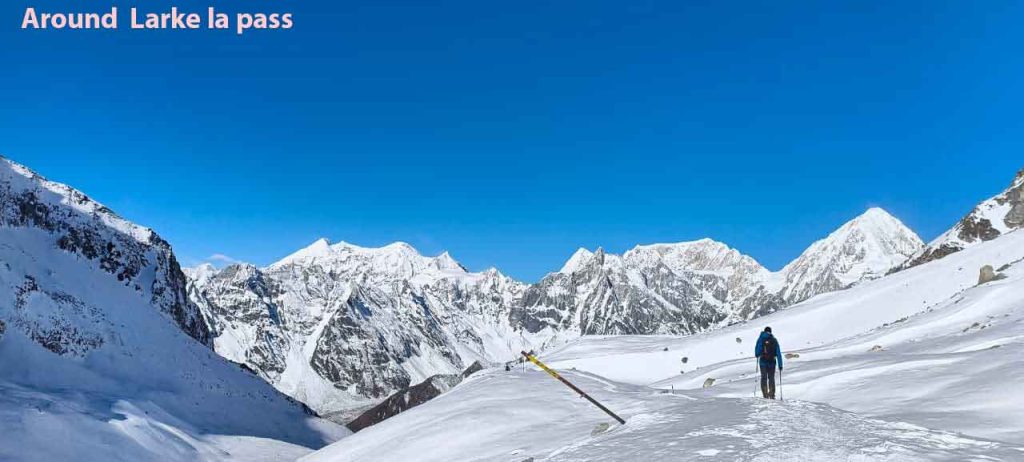
The Manaslu Circuit offers impressive views of high Himalayan peaks, glaciers, and remote mountain valleys.
Some of the prominent mountains in the region include:
- Mount Manaslu ( 8th highest mountain in the world at 8,163 meters (26,781ft)
- Himlung Himal
- Cheo Himal
- Kang Guru
- Annapurna II, visible from parts of the route
As you approach Larke La, the landscape becomes increasingly alpine. The mountain scenery around the pass and the descent towards Bimthang create some of the most memorable sections of the Manaslu Circuit.
If mountain photography is important to you, both routes offer excellent opportunities. The Annapurna Circuit provides greater landscape variety, while the Manaslu Circuit offers a stronger sense of remote mountain wilderness.
Villages, Local Culture and Accommodation
A Himalayan trek involves more than reaching a mountain pass. The villages, local people, food, and traditions also shape the experience.
Life Along the Annapurna Circuit
The Annapurna Circuit passes through several established mountain settlements. Manang is one of the main highlights, with traditional stone houses, monasteries, bakeries, and mountain lodges.
You can experience the local culture, explore the surrounding villages, and learn about the lifestyles of communities living in the high Himalayas.
The route has a relatively well-developed teahouse network, offering different accommodation and food options. Facilities vary by village and altitude, but trekkers generally have more choices than on the Manaslu Circuit.
Life Along the Manaslu Circuit
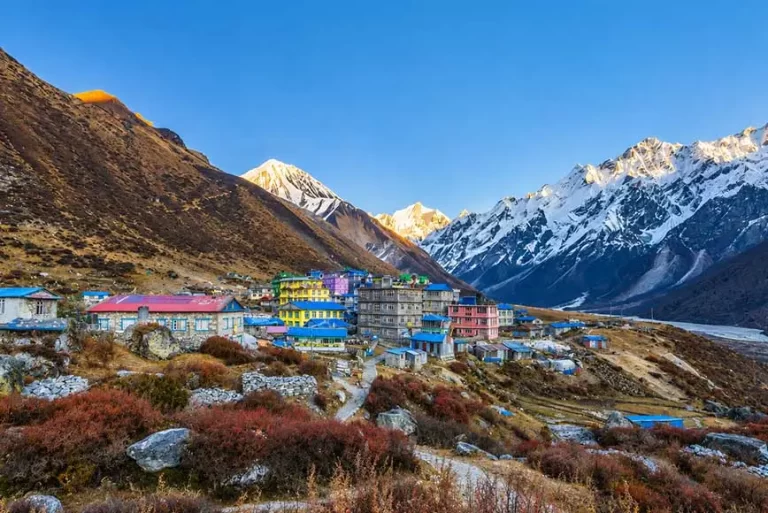
The Manaslu Circuit offers a more remote cultural experience. Villages such as Namrung, Lho, Samagaun, and Samdo reflect strong Tibetan cultural influences.
You can visit monasteries, observe traditional mountain lifestyles, and experience the peaceful atmosphere of settlements surrounded by high Himalayan landscapes.
Accommodation is available in teahouses along the main route, but facilities and choices can be more limited, especially in the upper sections.
If you prefer a more established trekking route with a wider range of facilities, the Annapurna Circuit may suit you better. If you want a quieter journey through remote Himalayan villages, the Manaslu Circuit offers a special experience.
Which Trek Has Better Road Access?
The Annapurna Circuit generally offers more transportation flexibility and road access than the Manaslu Circuit. This can make it easier to shorten certain sections or adjust your trekking itinerary.
The Manaslu Circuit, on the other hand, provides a more remote trekking experience, particularly in the upper sections. Although road development has reached parts of the lower route, the journey towards Samagaun, Samdo, Dharamsala, and Larke La still offers a stronger sense of wilderness and adventure.
If you prefer greater flexibility with transportation and itinerary planning, the Annapurna Circuit may be a better choice. If you want to experience a more remote Himalayan journey with fewer road interruptions in the upper region, the Manaslu Circuit may be more appealing.
Trekking Duration and Overall Route Experience
The time required for each trek depends on your starting point, transportation, acclimatisation schedule, and additional destinations.
Annapurna Circuit Trek
Many trekkers complete the main Annapurna Circuit in approximately 9 –16 days. The route includes the journey through Manang, the Thorong La crossing, and the descent towards Muktinath.
You can also extend the itinerary to include Tilicho Lake, visit additional villages, or continue towards Jomsom and other destinations.
Road development has changed some sections of the traditional route, so the actual walking itinerary can vary.
Manaslu Circuit Trek
Many trekkers complete the Manaslu Circuit in approximately 10–14 days, depending on the itinerary and transportation arrangements.
The route follows the Budhi Gandaki Valley through traditional villages before reaching Samagaun, Samdo, and Dharamsala. After crossing Larke La, trekkers descend towards Bimthang and continue to Dharapani.
You can also extend your adventure by including the Tsum Valley, although this requires additional trekking days and permit arrangements.
The Manaslu Circuit offers a more remote experience, while the Annapurna Circuit provides more opportunities to adjust the itinerary and explore additional destinations.
Permits and Trekking Regulations
Both routes require the correct permits and compliance with Nepal’s current trekking regulations.
Permits for Thorong La Pass
The Annapurna Circuit passes through the Annapurna Conservation Area. Trekkers need an Annapurna Conservation Area Permit (ACAP).
Permits for Larke La Pass
The Manaslu Circuit passes through a restricted area. Foreign trekkers need a Manaslu Restricted Area Permit (RAP) and a Manaslu Conservation Area Permit (MCAP). Trekkers continuing through Dharapani and into the Annapurna Conservation Area also need the applicable ACAP permit.
The restricted-area permit must be arranged through a registered trekking agency, and a licensed guide is required. Nepal changed its restricted-area permit arrangements in March 2026, including allowing individual trekkers to obtain permits through an agency with a licensed guide. Always confirm the current requirements when booking.
Working with a registered local trekking company helps you arrange the correct permits and avoid problems at checkpoints.
Best Season to Cross Thorong La and Larke La
Spring and autumn generally offer the most favourable trekking conditions for both passes.
Spring: March to May
Spring brings longer days, improving weather, and beautiful mountain scenery. Lower sections of the trails may display colourful rhododendron forests.
However, snow can remain around both high passes, particularly early in the season. Trekkers should check local weather and trail conditions before attempting the crossing.
Autumn: September to November
Autumn is one of the most popular seasons for Himalayan trekking in Nepal. The monsoon generally clears the atmosphere, creating excellent mountain views.
October often attracts many trekkers to both the Annapurna and Manaslu regions. The weather can be favourable, but temperatures at high elevations still drop considerably, especially during early mornings.
Winter and Monsoon
Winter can bring heavy snowfall, freezing temperatures, and difficult conditions around both passes. Some crossings may become unsafe or temporarily inaccessible.
The monsoon brings rain, cloudy conditions, and possible landslides on lower sections of the routes. Weather patterns vary, so trekkers should not assume that either pass will remain accessible throughout the year.
Which Pass Should You Choose?
After comparing the altitude, crossing day, scenery, accommodation, and trekking experience, your choice should depend on the type of Himalayan adventure you want.
Choose Thorong La Pass If:
- You want to complete the famous Annapurna Circuit Trek.
- You want to cross a higher pass at 5,416 metres.
- You want to explore Manang, Mustang, and visit the sacred Muktinath Temple.
- You prefer better road accessibility, more teahouses, and flexible trekking itineraries.
- You want to extend your trek to Tilicho Lake.
- You prefer a trek with simpler permit requirements.
Choose Larke La Pass If:
- You want to explore the remote Manaslu region and quieter trails.
- You enjoy traditional Himalayan villages and Tibetan-influenced culture.
- You want spectacular views of Mount Manaslu, a famous 8,000-metre climbing peak.
- You prefer a more remote adventure with limited road access in the upper region.
- You want to experience the Manaslu Circuit Trek with its restricted-area permit requirements and guided trekking regulations.
- Neither pass is automatically better than the other. Thorong La offers a higher crossing and access to the Annapurna and Mustang landscapes, while Larke La offers a remote Himalayan experience through the Manaslu region.
Final Advice from a Local Trekking Guide
With our years of experience guiding trekkers in the Himalayas, we believe both crossings offer unique and unforgettable experiences. Choosing between Thorong La Pass and Larke La Pass depends on your interests, trekking experience, available time, and the type of Himalayan adventure you want—not simply which pass is higher.
If you want to explore a famous Himalayan trekking route, enjoy diverse landscapes, and visit Muktinath, we recommend the Annapurna Circuit and Thorong La Pass. If you prefer remote mountain villages, quieter trails, Tibetan-influenced culture, and dramatic views of Mount Manaslu, we recommend the Manaslu Circuit and Larke La Pass.
If time allows, you can also combine both treks into one extended adventure, crossing Thorong La Pass and Larke La Pass. This requires additional trekking days, proper acclimatisation, and careful planning, but allows you to experience both the Annapurna and Manaslu regions in one journey.
Whether you choose one pass or both, Ruby Alpine Trails is here to help you plan your Himalayan adventure. Our experienced local guides can arrange your itinerary, permits, accommodation, transportation, and trekking support according to your time, interests, and experience.
Explore Nepal with a local team that understands the mountains.